
Our Story
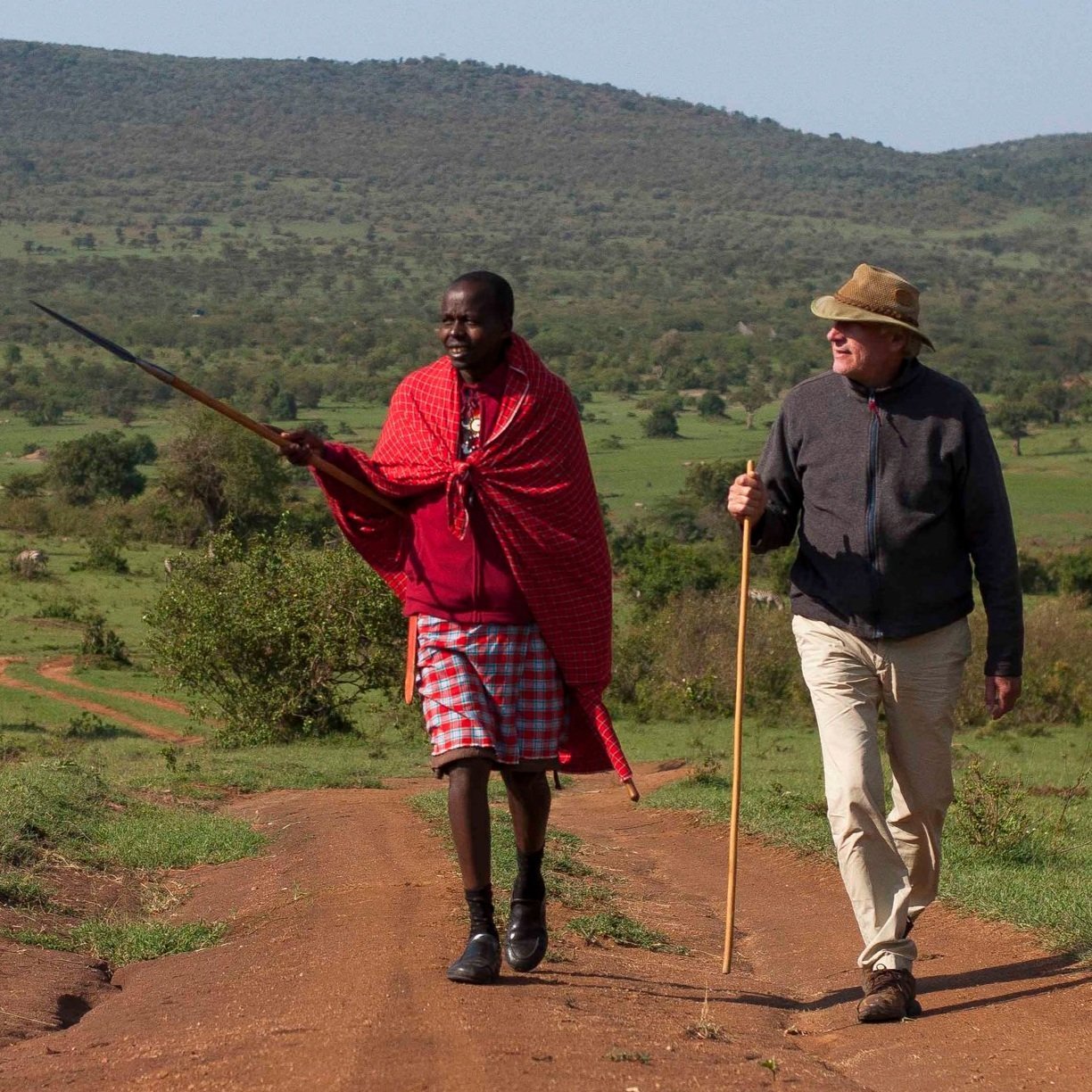
Entumoto Safari Camp is built on shared passion, a dedication to East Africa, and a deep commitment to the Maasai Mara. The camp was established in 2009, founded on a partnership between Swedish entrepreneur Karl-Johan von Heland (Kalle) and Rimoine Ole Kararei, a young Maasai studying at Nairobi University.
A partnership rooted in shared passion for East Africa
Kalle’s connection to East Africa is generational: his grandfather, Erik von Heland, managed Karen Blixen’s famous coffee farm outside Nairobi from 1919–1922. Kalle and his wife, Eva Hamilton (who spent five years of her childhood in Ethiopia), have since spent 45 years taking safaris across East Africa.
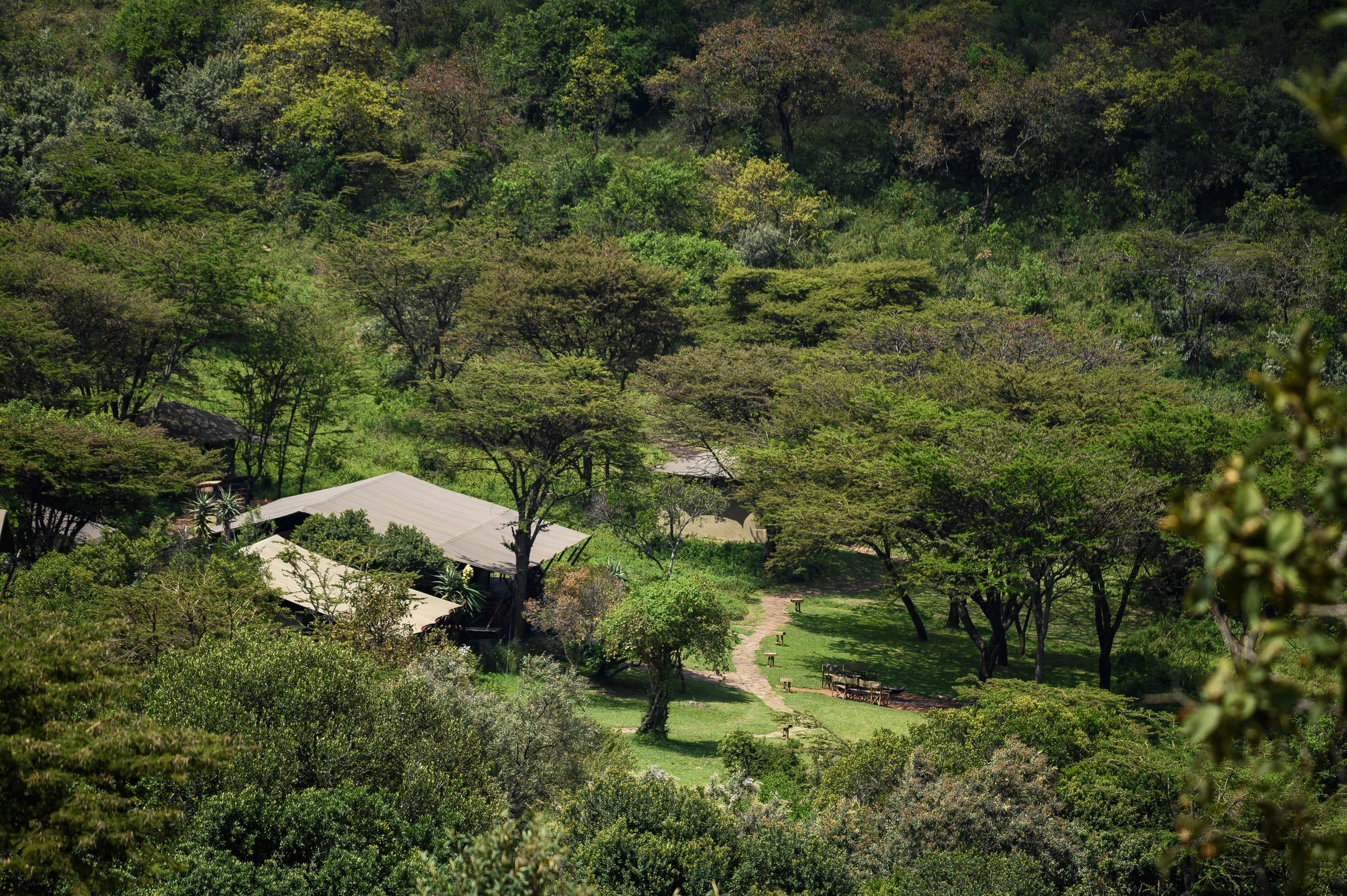
This profound connection led Kalle to seek a local partner. He met Rimoine through his relative, Kjell Nordenskiöld, who helped support Maasai students attending university. When Kalle sought to build a safari camp offering an authentic, high-quality experience, he asked Rimoine to find the perfect location. Rimoine succeeded, locating a beautiful, quiet valley adjacent to the Maasai Mara Reserve—the site of Entumoto today. Early investment also came from friends with their own history in Kenya, including Anders Abenius, whose love for the country was sparked while reporting on the legendary Safari Rally in 1989.
“I had been searching for the right opportunity in East Africa for twenty years. When Rimoine showed me this valley and said he wanted to help create a camp here, I knew my dream was about to come true. This place looks exactly has I have always imagined it.”
Entumoto partners & ownership
Construction began in 2009. The original investors were Kalle’s friends who were passionate about the project, including former journalist and media entrepreneur Anders Abenius, who remains an active co-owner.
The ownership group now includes key individuals dedicated to the camp’s success and future: Kajsa von Geijer (former HR and Sustainability Director, Thule), Susanne Hobohm (investor and former journalist), Rimoine Ole Kararei, and three integral long-term team members: Festus Mbindyo (CFO), John Murage Ndirangu (Camp Manager), and Isaac Kasura (Senior Guide).
We believe that every member of the Entumoto team counts, and this local ownership is central to our commitment to the community and the standards we maintain.
-

Karl von Heland & Rimoine Ole Kararei
Founders of Entumoto and Mara Siana Conservancy
-

Anders Abenius
Partner of Entumoto since 2008
-
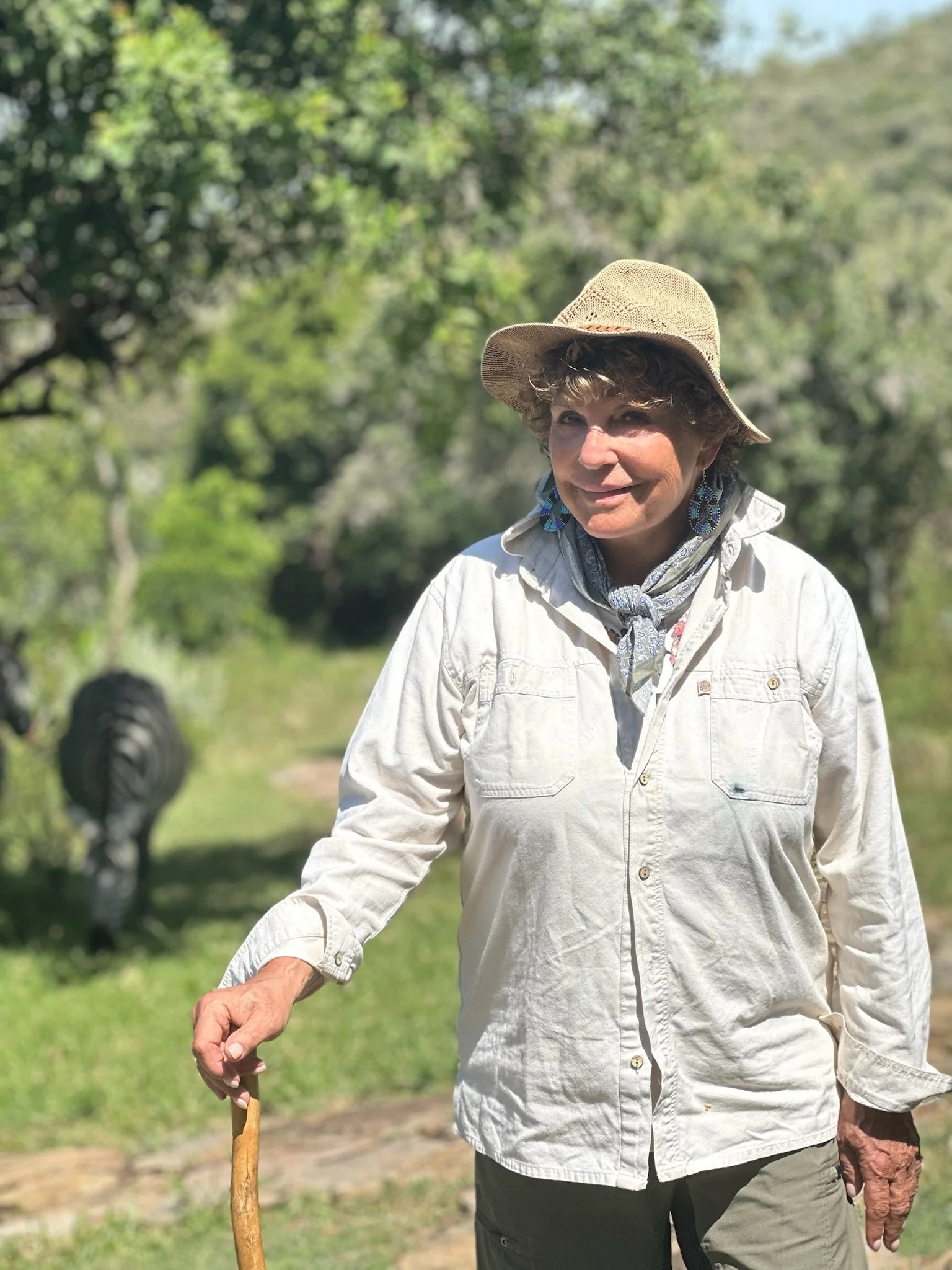
Susanne Hobohm
Partner of Entumoto since 2016
-
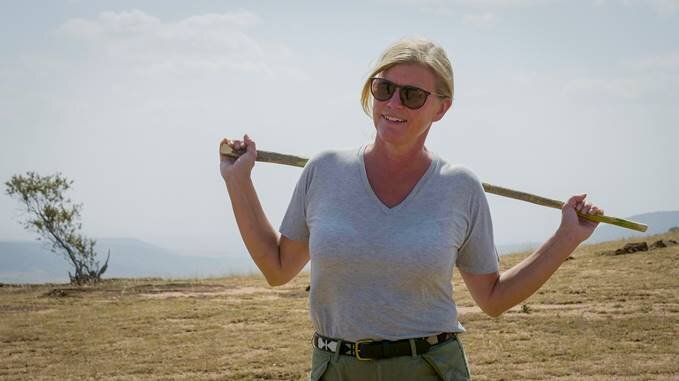
Kajsa von Geijer
Partner of Entumoto since 2017
-
Festus Mutuku
Chief Financial Officer
-
John Murage Ndirangu
Camp Manager
-
Isaac Kasura Parsaloi
Guide Guru
Entumoto Today
A camp dedicated to quality and responsibility
Entumoto was created by passionate partners who focused intensely on two things: delivering an exceptional experience and treating all staff with respect. This simple formula has turned Entumoto into a leading camp in the Maasai Mara region.
Top-Ranked Value: We are ranked #1 out of 208 listed lodges and camps on TripAdvisor for "Best value in Maasai Mara."
Sustainability: Entumoto holds a Gold Certification in Eco-Tourism, recognizing our consistent commitment to responsible environmental practices.
We welcome guests from across the world, including the USA, UK, Germany, Spain, UAE, and Scandinavia.

The story of Mara Siana Conservancy
Entumoto Safari Camp is a key partner in the creation and success of the Mara Siana Conservancy, a vital conservation area linking to the Maasai Mara National Reserve.
In the early 2000s, escalating cattle grazing and the planned division of communal land into private plots threatened the critical Sekenani valley wildlife corridor. In 2008, Entumoto intervened, proposing to lease the land from the community for conservation to prevent settlement and fragmentation.
On March 31, 2014, the Mara Siana Conservancy was officially formed, with hundreds of landowners agreeing to lease their individual plots and choose conservation over fragmentation.
Today, Mara Siana protects 35,322 acres through long-term agreements with 1,951 landowner families. This partnership ensures the community receives guaranteed income while preserving the ecosystem. The conservancy acts as a critical wildlife corridor, maintaining genetic diversity and facilitating seasonal migrations. A recent animal count found 86% of the region’s wildlife in the conservancies, proving the success of this community-based conservation model.